Financial services website design & development: A 2026 guide
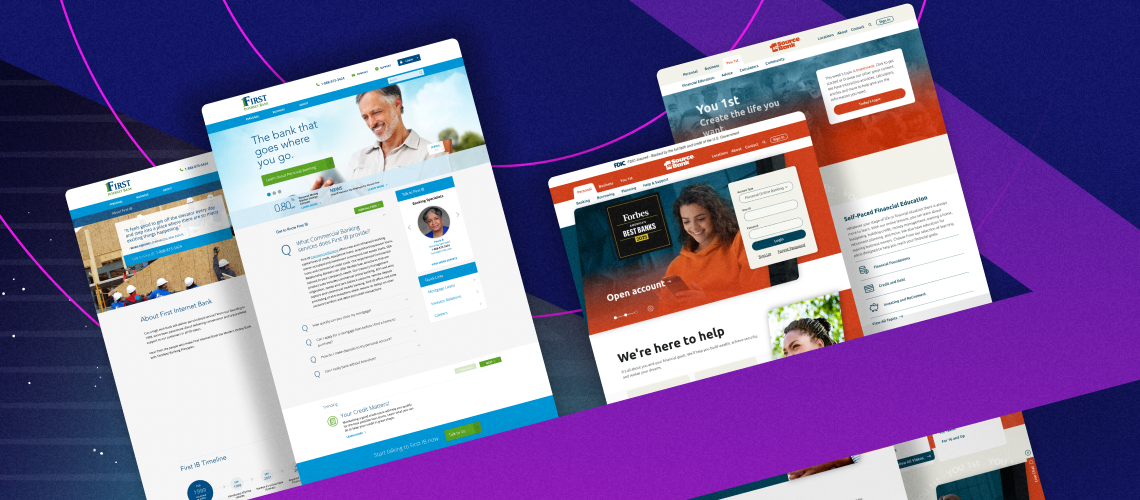
Conversion-focused, compliance-aware, and built for how modern buyers research financial products.
Clique Studios partners with financial institutions, fintech companies, and lending organizations to design and build websites that drive measurable business outcomes: more qualified leads, stronger trust signals, and better conversion performance. We combine deep industry experience with CRO, AEO, and modern development frameworks to help financial brands compete in a digital-first market. From banks to venture firms to fintech platforms, we’ve built high-performing websites that align brand, compliance, and growth.
Who are the best financial services web design agencies?
Financial institutions evaluating web design partners typically encounter three types of agencies — and the right fit depends on what your organization is actually trying to accomplish.
Banking specialists focus exclusively on banks and credit unions. They bring deep compliance knowledge, proven templates, and established processes for regulated environments. The tradeoff is flexibility: these agencies are optimized for consistency and risk reduction, not for differentiated experiences or measurable performance improvement.
Multi-industry digital agencies bring broad web design and SEO expertise across many verticals, including financial services. They tend to be strong on content strategy, usability, and search visibility. The tradeoff is depth: financial services is one of many industries they serve, which can mean less fluency with the specific conversion dynamics of a regulated, high-trust buying environment.
Performance-focused partners combine genuine financial services experience with a measurable-outcomes orientation — conversion rate optimization, structured content for AI discoverability, modern platform architecture, and the ability to build systems that improve over time rather than just launching a modernized site.
Clique Studios operates in the third category. We partner with banks, credit unions, fintech platforms, lending organizations, and investment firms to design and build websites that drive measurable business outcomes. Our work spans regional banks, fully digital institutions, capital markets firms, and fintech platforms — giving us a perspective on the full range of how financial services organizations use their website to compete.
The right partner depends on whether your primary goal is compliance confidence, content and SEO/AEO improvement, or measurable conversion and growth performance. For institutions focused on the latter, Clique is built for that work.
Why financial services websites are different?
Key takeaways: Financial services websites are different because financial buyers research extensively, involve multiple stakeholders, and weigh trust as heavily as product features or pricing. Financial services websites face regulatory pressures that most industries don't, including content governance, audit trails, WCAG accessibility requirements, and strict data privacy controls. A financial services website must explain complex products clearly while reducing friction across long sales cycles where prospects decide before ever speaking to sales.
Financial services websites operate under a unique set of pressures that most industries don’t face. Unlike simpler B2C experiences, these sites must balance credibility, compliance, and performance while supporting buyers who are making high-stakes decisions.
Finally, the website plays a critical role in sales enablement. In long and often intricate sales cycles, the website must reduce friction at every step. Content should proactively answer common objections before a prospect ever speaks to sales. Clear navigation, strong messaging, and intuitive user experience directly impact how quickly and confidently prospects move forward.
Clique designs financial services websites with these realities in mind: balancing reassurance, comprehension, and performance to create digital experiences that support both users and business outcomes.
Complex buyer behavior
Buyer behavior in financial services is fundamentally different. Prospects are typically risk-averse and research extensively before taking action. Decisions are rarely made by a single person, typically finance, legal, complaince, and operational stakeholders are often involved. As a result, legitimacy and credibility carry as much weight as product features or pricing, and the website plays a critical role in establishing both early in the journey.
- Buyers are risk-averse and research-heavy
- Multiple stakeholders (finance, legal, operations) influence decisions
- Confidence and credibility are as important as features and pricing
Regulatory and compliance requirements
Regulatory and compliance requirements add another layer of complexity. Financial institutions must manage content governance carefully, often requiring approval workflows, audit trails, and strict controls over what gets published. Security, privacy, and data handling aren’t just technical considerations, they are core to the user experience. Accessibility standards like WCAG are also frequently required, making usability and compliance tightly intertwined.
- Content governance, approvals, and audit trails are critical
- Security, privacy, and data handling must be built into the experience
- Accessibility standards (WCAG) are often required
Product and messaging complexity
Financial products are inherently intricate. Whether it’s lending structures, investment strategies, or fintech platforms, these offerings are not always easy to explain. Differentiation to users is not always top of mind as many focus on Rates, and requires thoughtful messaging and content strategy. A strong financial services website educates, clarifies, and builds confidence by bring this messaing into the UX experience.
- Financial products are difficult to explain clearly
- Differentiation is not always obvious, making it challenging to stand out beyond your rate
- Websites must educate in order to convert
Sales enablement role
In long and often layered sales cycles, the website must reduce friction at every step. Content should proactively answer common objections before a prospect ever speaks to sales. Clear navigation, strong messaging, and intuitive user experience directly impact how quickly and confidently prospects move forward.
- Websites must reduce friction in long sales cycles
- Content should pre-answer objections before sales conversations
- Strong UX directly impacts deal velocity
Our experience in financial services
Clique Studios has worked with banks, fintech platforms, credit unions, and investment firms to design and build high-performing digital experiences.
Representative experience includes:
Banks & credit unions
1st Source Bank

- Redesigned UX and navigation, improving usability for retail users by 20%
- Prioritized self-service while maintaining relationship-driven brand positioning
- Launched "Uno" and integrated bot to aid users further while on the site
- Skinned native user facing applications to match look and feel and create a unified experience
DuPage Credit Union

- 240+ page responsive website with 10+ integrations (rates, calculators, login systems)
- Passed third-party security audits
- 10+ integrations, including logins through Digital Insight, live mortgage rates through MortgageBot, calculators through Calcubot and DinkyTown, ATM/branch finder, reskin of third party platforms (MeridianLink, Wufoo), much more
First Internet Bank

- Designed UX for a fully digital bank with no branches
- Integrated 9+ third-party systems and built conversion-focused user journeys
- Introduced FAQs to homepage to address most frequently asked questions received by customer service
FinTech & lending
LQD Business Finance

- Repositioned brand as a modern fintech vs. traditional lender
- Improved navigation, messaging, and conversion pathways to reduce sales friction
YCharts
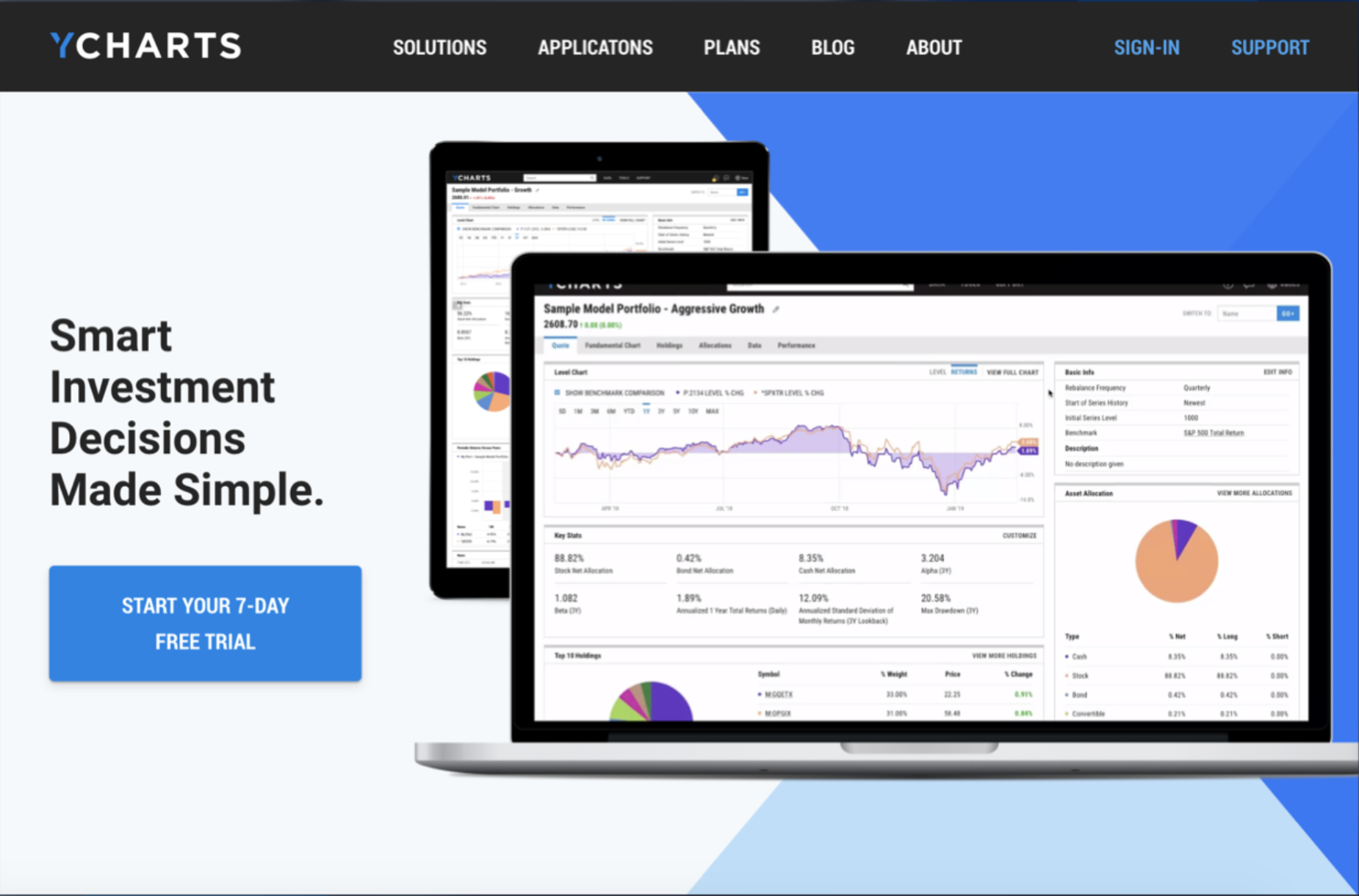
- Balanced innovative product positioning with confidence for traditional investors
- Built a user-centric experience supported by integrations (HubSpot, HR tools)
FinTEx & Currency Chicago
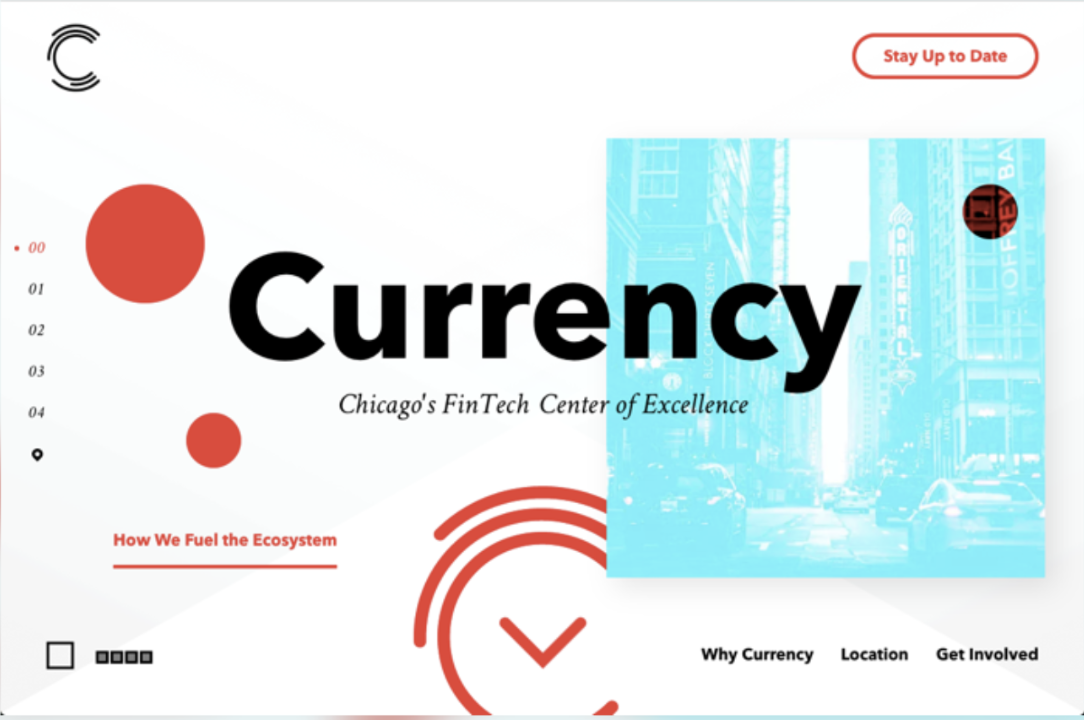
- Built brand, messaging, and digital presence from the ground up
- Delivered custom design, animation, and strategic positioning for fintech ecosystem growth
Capital markets & investment firms
Pritzker Group

- Redesigned site to reflect scale, portfolio breadth, and national visibility
- Developed new information architecture and content strategy to position private equity vs. venture capital audience experiences
True North Venture Partners

- Created a mission-driven content experience aligned to sustainability focus
- Combined clean UX with advanced frontend interactions that drive increased engagement
Cortland Capital Markets
- Delivered modern, scalable platform aligned with organizations growth and innovation
- Provided UX/UI design to proprietary platforms
- Cortland was later acquired by the Alter Domus
What this means:
- Deep understanding of regulated environments
- Experience balancing innovation with credibility
- Proven ability to drive usability, engagement, and conversions
What makes a great financial services website?
Key takeways: A great financial services website balances reassurance, compliance, and lead velocity by making complex products easy to understand and guiding high-intent users toward action. Successful financial services websites combine clear UX, AEO-ready content, strong trust signals, fast technical performance, and structured data that AI search engines can cite. Financial services websites succeed when design, compliance, and sales enablement work together to reduce friction across long, multi-stakeholder buying cycles.
Greatness in financial services web design isn't about any single element — it's about how confidence, coherence, performance, and buyer action work together as one system. Financial buyers don't experience a website as a collection of features; they experience it as a continuous signal of whether an institution is credible, competent, and worth engaging with. A site can have polished visuals and still fail if the navigation confuses buyers. A site can have strong content and still fail if it loads slowly on mobile. A site can have fast performance and still fail if it doesn't answer the specific questions a risk-averse buyer needs resolved before reaching out. Every layer has to hold up, because buyers will disqualify an institution the moment any one of them breaks down.
The best financial services websites treat design, content, engineering, and discoverability as interdependent disciplines rather than sequential handoffs. UX decisions shape what content is needed. Content decisions shape how structured data should be modeled. Structured data shapes how AI answer engines cite the brand. Technical performance determines whether any of that work actually reaches users. When these disciplines are planned together from the start, the result is a website that performs across every metric that matters — conversion rate, lead quality, organic visibility, AI citation, and sales velocity. When they're planned separately, the result is a site that's technically acceptable in each area but doesn't compound across them.
Financial services web design also has to account for how modern buyers research. A bank's prospects aren't just browsing the bank's website — they're asking ChatGPT which credit union is right for a small business, asking Perplexity to compare fintech lenders, and reading Google AI Overviews before they ever click through to a branded site. That shift has changed what "great" means. A financial services website that isn't structured for AI discovery is invisible during the exact research phase where buyers form their shortlists. Great sites today don't just rank in traditional search — they're cited, summarized, and recommended by the AI systems buyers increasingly credibility.
The five areas below — UX and navigation, content strategy, conversion strategy, technical performance, and SEO plus AEO readiness — are the pillars that separate financial services websites that generate measurable business outcomes from ones that just exist. None of these pillars can carry the site alone, and none can be skipped without consequences. The sections that follow break down what each pillar looks like in practice.
UX & navigation
- Clear pathways for different audiences (retail, commercial, investors)
- Simplified product structures and labeling
- Fast access to high-intent actions (apply, demo, contact)
- Search and filtering for complex offerings
Content strategy (AEO-friendly)
- Clear explanations of products and differentiators
- Structured FAQs answering real buyer questions
- Content built around intent, not just keywords
- Machine-readable formatting for AI systems
Conversion strategy
- Multiple conversion pathways (forms, calculators, CTAs)
- Progressive disclosure for intricate products
- Credibility-building elements at key decision points
- Sales enablement content embedded throughout
Technical performance
- Fast load times and optimized Core Web Vitals
- Secure infrastructure and data handling
- Scalable CMS architecture (Webflow, WordPress, headless)
- Integration-ready (CRM, marketing automation, APIs)
SEO + AEO readiness
- Structured data (FAQ, Organization, Article schema)
- Internal linking across product and content clusters
- Clear entity signals (brand, services, expertise)
- Content designed for citation in AI summaries
What features should a financial services website include?
Key takeaways: A financial services website should include a clear value proposition, trust signals, structured FAQs, fast load times, and deal pathways like demos, applications, and contact forms. Essential financial services website features include integrated calculators, secure login access, CRM integrations, and a scalable CMS that supports ongoing compliance updates. The best financial services websites combine AEO-ready structured data, strong Core Web Vitals, and clear competitive differentiation to drive qualified leads and build buyer confidence.
Every financial services website should start with a foundation of features that support legitimacy, usability, and lead quality. The specific mix varies depending on whether the organization is a community bank, a fintech platform, an investment firm, or a lending business — but the underlying principles are consistent. A financial services website needs to communicate credibility instantly, explain multi-layered products clearly, make high-intent actions easy to find, and give buyers enough self-service information to move forward with confidence. Missing any one of these elements creates friction that competitors will happily exploit.
The features below represent the baseline that high-performing financial services websites share. Some are user-facing elements that shape how prospects perceive the brand in the first five seconds — clear value propositions, trust signals, and visible differentiation. Others are operational and technical features that determine whether the site can actually convert, scale, and stay compliant over time — CMS flexibility, secure login infrastructure, analytics, and integrations with the tools sales and marketing teams rely on. Both categories matter, and neither can carry the site alone.
It's worth noting that this list isn't a checklist in the traditional sense. Simply having each feature present doesn't guarantee performance — execution quality is what separates financial services websites that generate qualified leads from ones that just look professional. A well-designed FAQ section that answers real buyer questions with structured data will outperform a generic FAQ with the same topics. A fast site that hits Core Web Vitals benchmarks will convert better than a slow site with identical content. A scalable CMS that empowers marketing teams to publish compliant content quickly will outperform a rigid platform that bottlenecks every update through developers. Features are table stakes; how they're implemented is the real differentiator.
Core features every financial services website should include:
- ✅ Clear value proposition above the fold
- ✅ Industry-specific trust signals (compliance, partnerships, certifications)
- ✅ Structured FAQs for AI discoverability
- ✅ Fast load times and strong Core Web Vitals
- ✅ Lead pathways (demo, apply, contact)
- ✅ Integrated calculators, tools, or product configurators
- ✅ Secure login and account access
- ✅ Clear differentiation vs. competitors
- ✅ Scalable CMS for ongoing updates
- ✅ Analytics and tracking for lead optimization