How Ted Listens Came to Life
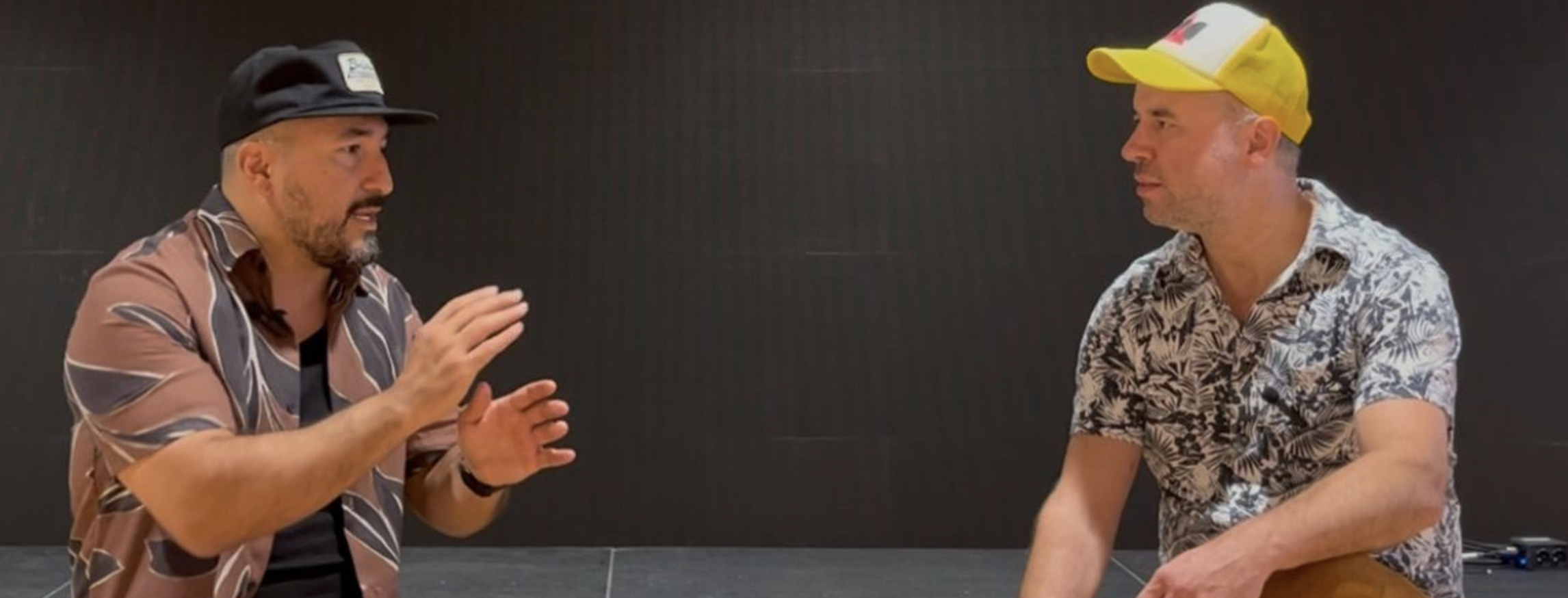
The origin story…
I was late to the game in getting into listening to podcasts. It wasn’t until maybe 2018, and ironically it came from a place of wanting to start reading more.
The first book that I bought on that initiative was “Tools of Titans,” by Tim Ferriss. I sat down to read and was greeted with a prologue that said “read this book differently, if bored, skip a chapter, if interested take notes… this is a collection of insights from my podcast guests.” So I did just that, and got inspired to check out his podcast.
I instantly fell in love with the format for the same reasons everyone does. Ever since that experience, I thought I would love to have a podcast sometime.
The problem was I didn’t know what kind of concept would be fun for me to produce, but more importantly, interesting to other people. The one thing I knew I didn’t want to do was produce a podcast just for the sake of making one.
Years later, I had a couple conversations in a row one week…
One was around the fact that Clique had expanded. Clique started as a Chicago business working with Chicago clients. Around 2015, we made a decision to expand beyond Chicago. That’s when we opened our Colorado office and later planned to open another office in Austin. (The Austin launch was supposed to happen in April of 2020. COVID hit. That office never came to fruition.)
Fast forward to 2024, and I realized that while we still did a ton of work in Chicago, we had kind of abandoned Chicago being part of our brand.
I had a problem with that because I love Chicago!
I love the variety in the businesses here. I love the neighborhoods. Most of all, I love the people. Chicago has tremendous diversity in the types of businesses that exist here. Global brands, niche startups across industries, tech, bio, CPG, creative, you name it… there’s an incredible mix. As someone who gets bored easily, that’s one of the reasons I went into consulting and eventually started Clique with Derek. I love learning how different people thrive.
Chicago has that.
Then another conversation happened.
My niece was preparing to move back to Chicago after teaching in New York. I asked her what types of jobs she was looking for.
Her response was “Honestly, I’m just curious to learn what kinds of jobs there even are.”
That’s when it clicked.
I realized there was an opportunity to tell stories about what actually happens inside all these businesses, and the people behind the work itself.
One of my favorite parts of working at Clique is that every client requires us to get deep into understanding how their organization works, how they make money, and how they operate. It’s one of the greatest learning experiences built into the job. It’s why I do what I do. It’s why I’ve never wanted Clique to only specialize in one industry. Even when we build expertise in one area, we usually find ideas that can transfer into another.
So I started asking myself:
What if I took the same process I use when getting to know a client and just published it?
Could I share the value I get out of those conversations with other people?
And could I do multiple things at once:
- Reconnect Clique more deeply to Chicago.
- Produce content people might genuinely find interesting.
- Create something I would personally enjoy continuing to do.
At the same time, it gave me a chance to finally test what my friend Carlo had suggested, create meaningful short-form video content and leverage YouTube shorts. At Clique our 3 values are Build Something, Be a Student and a Teacher, and Make Someone Else's Job Easier. This had the ingredients to hit on all 3 if I was able to execute it… that was enough for me!
The First Episode, I phoned a friend…
The very first episode I recorded was actually the second episode published, with Jeff Dirrenberger.
Jeff and I have basically lived parallel lives professionally. We both run agencies, both coach our daughters’ soccer teams, both work out of the Civic Opera Building, and have crossed paths professionally for years.
I reached out and basically told him:
“Worst case scenario, this gives you a bunch of content for your business.”
He was totally game, we recorded the episode.
The conversation flowed naturally. I knew enough about his world to ask meaningful questions because our businesses overlap. It was also a great reminder how interesting the people we interact with every day are. I knew a lot about Jeff and his business, but I’d never heard him talk about it the way one does on a podcast, and I was totally impressed.
Afterward, I shared the episode privately with a few people. What surprised me wasn’t just that they listened, people enjoyed it and referenced specific points Jeff made. They weren’t simply supporting me, they enjoyed what my guest had to say.
That was a turning point for me.
Originally, this idea started partially as a marketing effort for myself and Clique Studios, but hearing people respond to the guest instead of to me made me realize the podcast worked best when it focused entirely on the guest, and that shifted the whole direction. Instead of looking at the podcast as a way to promote myself, I decided the podcast should be entirely focused on promoting my guests.
That realization also tied back to the business interview podcasts I personally loved listening to. I felt they gave me access to stories and experiences I normally wouldn’t hear, and some of the most interesting episodes were with people I’d never heard of before.
There’s something really compelling about discovering expertise and perspectives you weren’t expecting. I believe all people are interesting and have unique perspectives, it’s just a matter of giving them an opportunity to share. That became the goal of my show, creating that opportunity for others to share.
So I started building a guest list.
A Cohort by Design
Part of the strategy was featuring people who were already somewhat active publicly because I assumed they’d be easier to interview and more likely to share the content.
That assumption turned out to be correct, especially when first launching an unknown podcast.
The first official episode I published was with Teresa Ging from Sugar Bliss. She checked every box of what I hoped the podcast could become. Her story is incredible… she left a successful career in investment banking to bake, and launched a brand we now know as Sugar Bliss.
What I didn’t know before the interview was how deep that journey really went! She flew to France to get formally trained in baking, leveraged all kinds of resources to grow and promote her brand, and had several major setbacks along the way. The episode had everything I hoped the show could offer: A relatable story. A major career pivot. Challenges after initial success. A practical path others could learn from.
And on top of that, Sugar Bliss is already a business many Chicagoans know. I loved the idea that someone could listen to the story behind the business and then physically go experience it. It was a great episode to launch with.
From the start, I’ve been very intentional about what the guest mix looked like.
I didn’t want it to become only B2B companies. I didn’t want it to only feature already-famous Chicago names or already popular people. I wanted the show to reflect the actual diversity of Chicago’s economy, and I wanted to find stories most people might never hear.
One statistic I heard repeatedly from World Business Chicago stuck with me: “No single industry makes up more than 13% of Chicago’s economy.”
That diversity creates resilience, and it also creates an incredible amount of stories.
That became part of the thread running through the podcast.
Getting it out there…
Good content matters most, but if nobody knows it exists, the impact is limited. That’s where the marketing side came in.
At the time, LinkedIn was really the only social platform where I actively participated, and I only really used it to connect with people I actually know, not to build a following. That insight led to another important decision. *We decided not to brand the podcast around Clique Studios. (*We = Myself and my business partner, Derek. It’s critical that anyone doing something like this runs the idea past their partner or employer to clarify what it is, what it isn’t, and how it plays into your shared goals.)
Instead of folding it under Clique, I used my personal brand (which the Clique design team took to the next level with the branding and website!)
That’s how the name Ted Listens came to life.
Partly because it’s funny to anyone who knows me, I talk a lot, and honestly I’d always been annoyed by brands that use my name, so it was my turn. (Ironically, coming from someone who works in SEO, it was an oversight I have now overcome that the “Talks” using my name would dominate search results.)
Over time, the strategy worked. Now if you search “Ted Listens”, you get results tied directly to the podcast and the guests.
Production
As the podcast continued, I also learned a lot about production. Every episode so far has been recorded primarily using iPhones and Bluetooth lapel microphones. All editing has been done in GarageBand because I already knew how to use it from my music.
I intentionally don’t overproduce it, there’s something very Chicago about putting it out there for what it is. The quality improved over time, but I liked the idea that the show still had some grit to it.
Eventually I also realized that recording at businesses themselves made everything more interesting as it changed the atmosphere of the conversation, and my videos were starting to look the same when doing all the episodes in the same room.
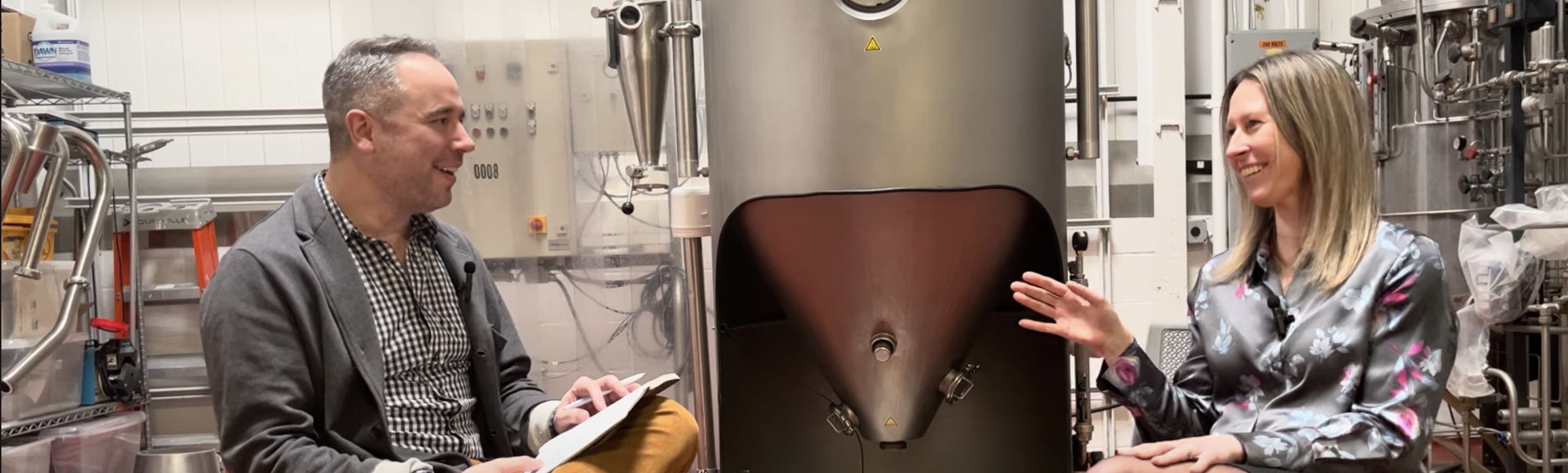
One example was my interview with Julie Drainville from Edlong Flavor Solutions.
We recorded inside an active manufacturing room. Machines were turning on and off in the background. There were giant mixing drums around us.
It gave the episode texture.
She also surprised me by preparing a sensory experiment for me during the interview because sensory science is part of her role. Moments like that made the show feel more immersive.
Part of going onsite made me a guest too, and pre-interview tours and seeing my guest interact with others always shaped parts of the interview that followed.
“But who cares?” ie: My Audience…
As the audience grew, the analytics became interesting too.
At first, listeners mirrored my own network. Lots of consultants, entrepreneurs, Chicago addicts, etc.
Over time, Spotify demographics started changing.
Different age groups. Different genders. Different audiences. The show was achieving diversity in audience. Thrilled.
I also noticed that older episodes also kept getting listens every time a new episode launched. To me, that proved people weren’t just listening because they personally knew the guest, they were exploring the show itself. It also confirmed my approach on my guest mix itself with the idea to build a mix of guests that would get new exposure to everyone!
Metrics?
Admittedly my metrics going into this were largely based around execution. Can I get at least one episode a month, turnaround time on episodes, prep and post work production, etc. I knew it would take time to build an audience so I just focused on the work vs. the results.
Then after a year, Spotify’s creator recap at the end of the year genuinely surprised me. According to Spotify's 2025 creator recap, the Ted Listens podcast was 84% more popular and received 91% more shares than any other podcast launched during its inaugural year.
Everyone loves some degree of validation, while it wasn’t an emmy nomination, it was a sign that the content was connecting with people, and the marketing strategy actually worked.
That also proved something bigger to me: This process could work for other people too.
For the marketing, I intentionally used myself as the guinea pig because I know a lot of executives and founders who want to build personal brands or thought leadership but don’t know how to execute consistently. I wanted to see if I could build a repeatable system that busy people could realistically sustain. If that’s you, ping me and I’ll share the recipe.
What now?
As the show has evolved, I’m continuing to experiment. I didn’t perfect anything yet, but it’s come far enough to try some new angles and see where that goes. Some in process are topic-focused episodes involving multiple guests and broader themes. And Chicago is a global city, the businesses here interact with industries, products, and people all over the world and I want to explore that more deeply too. We’ll see, I enjoy the challenge.
That said at its core, the mission remains the same:
- Highlight interesting people doing interesting things.
- Learn publicly in hopes others can learn too.
- Celebrate Chicago.
- Create something people genuinely enjoy listening to.
Frequently Asked Questions
What is the Ted Listens podcast?
Ted Listens is a Chicago business and community podcast featuring in person interviews with the founders, operators, artists, and civic leaders behind Chicago businesses. Episodes are designed to dive into origin stories, behind the scenes insights on operations and industries, and useful takeaways that may help listeners navigate their own careers and markets.
Who hosts the Ted Listens podcast?
Ted Novak, co-founder and Managing Director of Clique Studios, hosts the Ted Listens podcast. Ted Novak created the show to reconnect with Chicago's business community and to test a repeatable, interview-driven content system, while keeping the spotlight entirely on each guest.
When did the Ted Listens podcast launch?
The Ted Listens podcast published its first episode on February 13, 2025, featuring Teresa Ging, founder of the downtown Chicago bakery Sugar Bliss. Teresa Ging's story of leaving a career in investment banking to formally train in baking in France set the template for the show's focus on career pivots and Chicago entrepreneurship. Since launching, the Ted Listens podcast has published new episodes roughly once a month.
What equipment does the Ted Listens podcast use?
The Ted Listens podcast is recorded primarily on iPhones paired with Bluetooth lapel microphones, and every episode is edited in GarageBand. The intentionally simple setup keeps recording low friction and lets episodes happen on location inside guests' businesses. It also proves out a setup most people have access to which aids in the goal of establishing repeatable processes others can learn from.
Why does the Ted Listens podcast focus on Chicago?
Chicago's economic diversity drives the Ted Listens guest strategy: no single industry accounts for more than 13% of Chicagoland's GDP, according to World Business Chicago. That mix of global brands, startups, manufacturers, and cultural institutions produce great stories, and Chicago has a way of getting things done that comes through in the personalities of the guests. Plus, I love Chicago ;-)
Where can listeners find the Ted Listens podcast?
The Ted Listens podcast streams on Spotify and YouTube, and every episode page on the Ted Listens website includes a full transcript, guest details, and video. New episodes publish roughly once a month.
Is the Ted Listens podcast part of Clique Studios?
The Podcast is a project outside of Ted Novak's work with Clique. However, Clique Studios' design team created the podcast's branding and website, and the show remains closely connected to the agency's Chicago roots.
How are guests chosen for the Ted Listens podcast?
Ted Listens guests are chosen to reflect the actual diversity of Chicago's economy, mixing B2B companies, consumer brands, nonprofits, and cultural institutions. I mostly source from my network but have had guests on the show who were recommended to me by others as well.
Interested in starting a podcast, or building a repeatable content engine? Happy to share what I've learned, Contact Clique Studios.