Build something that rocks

Content management
UX & UI
Information architecture
Web design
Custom development
Strategy workshops
Industry
Arts & Entertainment
Year
2025
Bringing the party online.

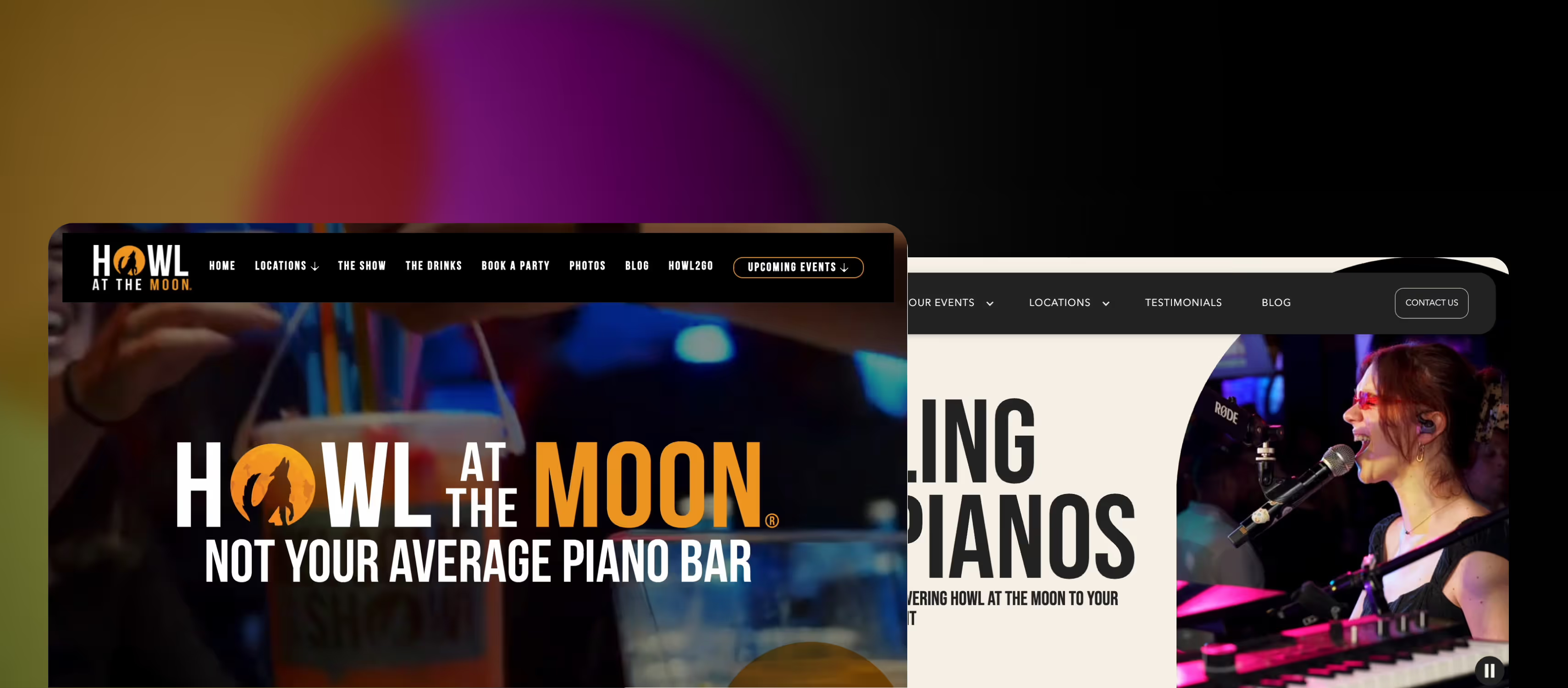
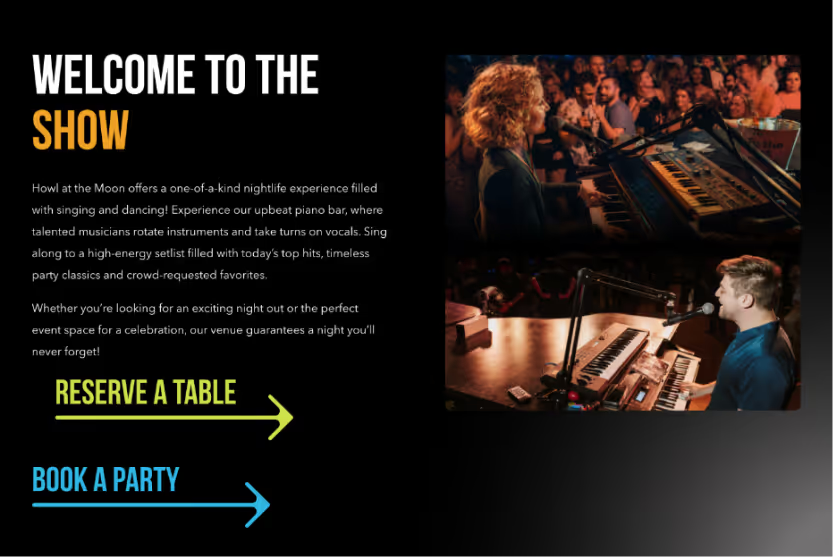
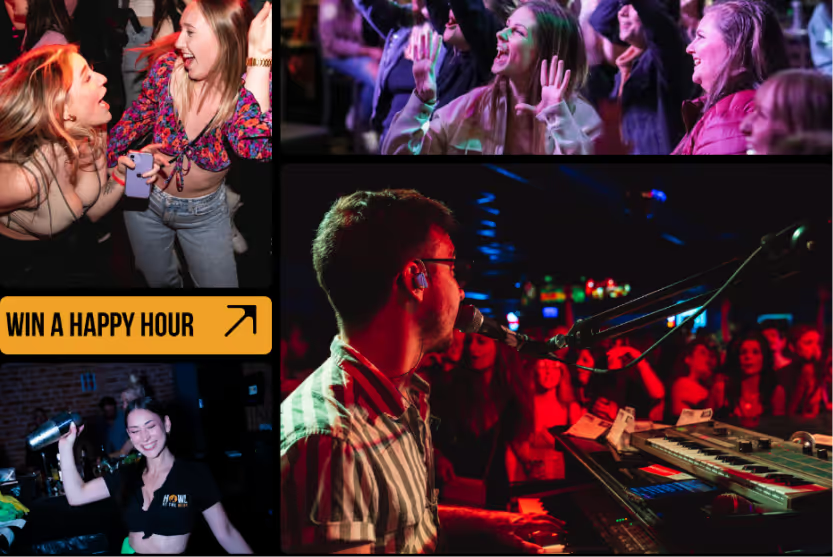
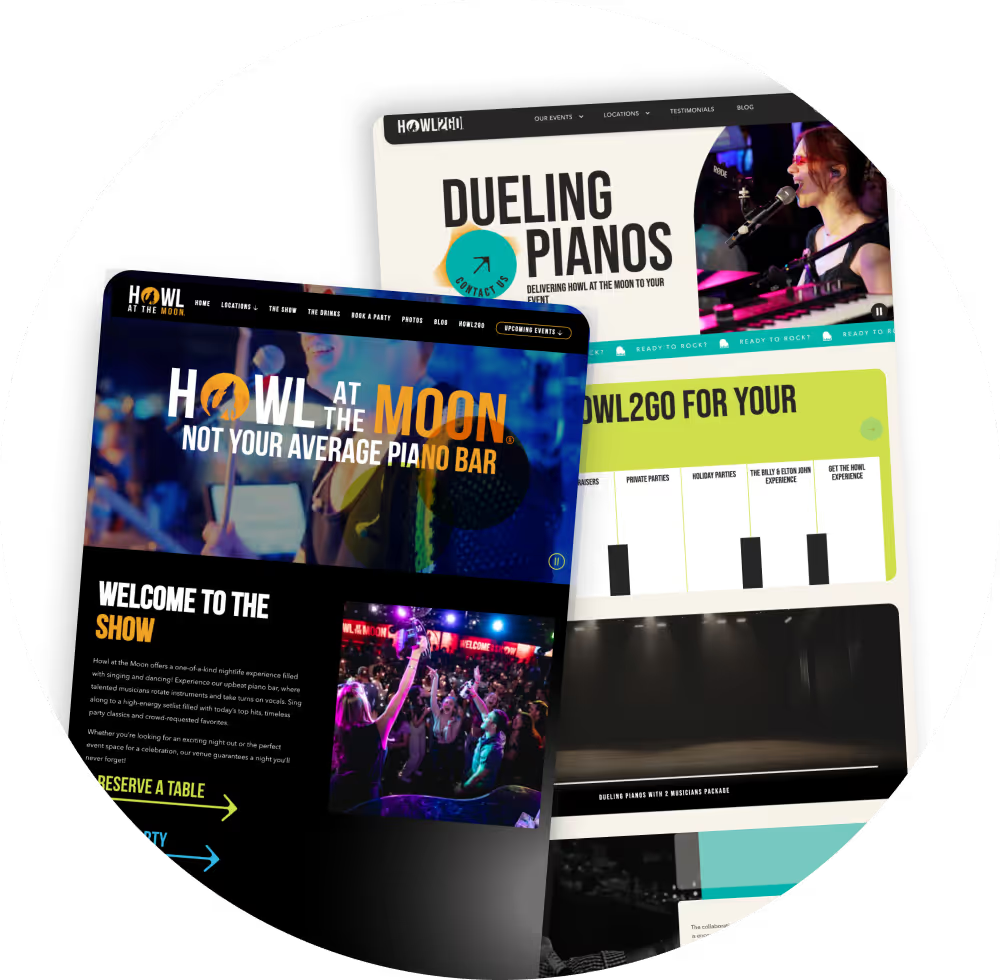
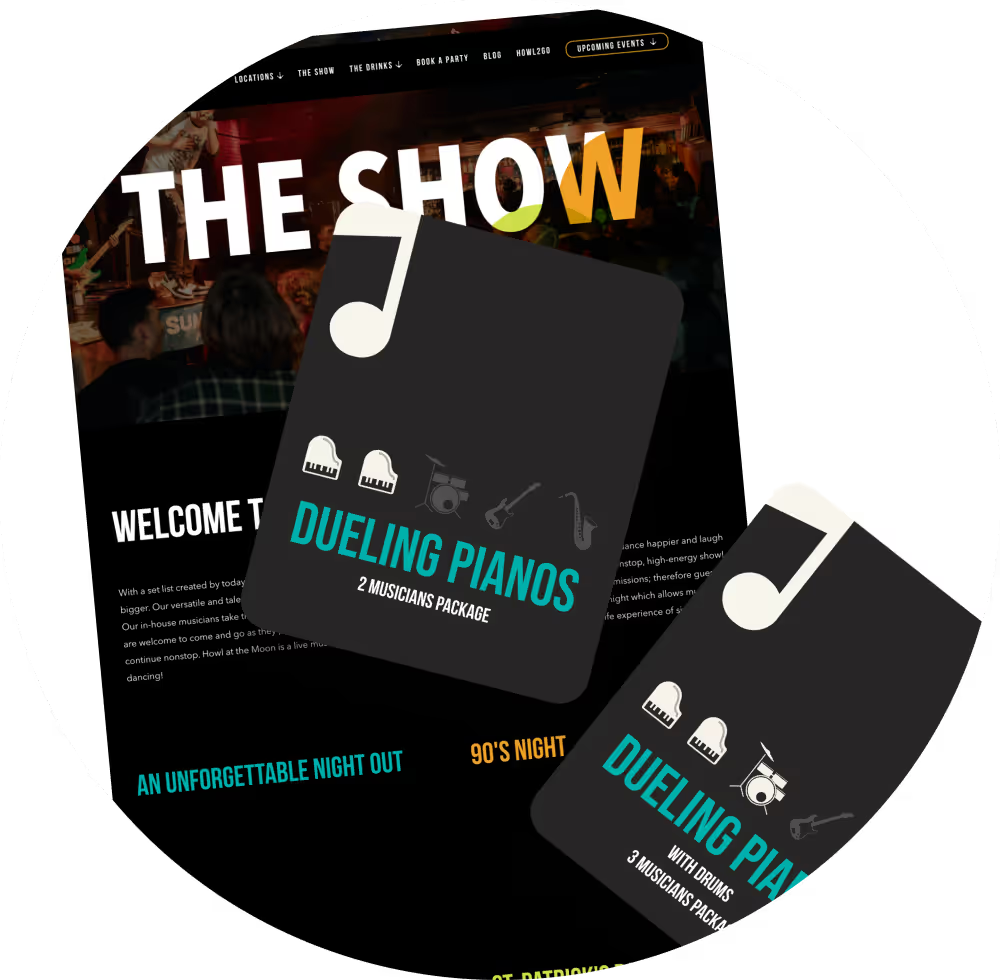
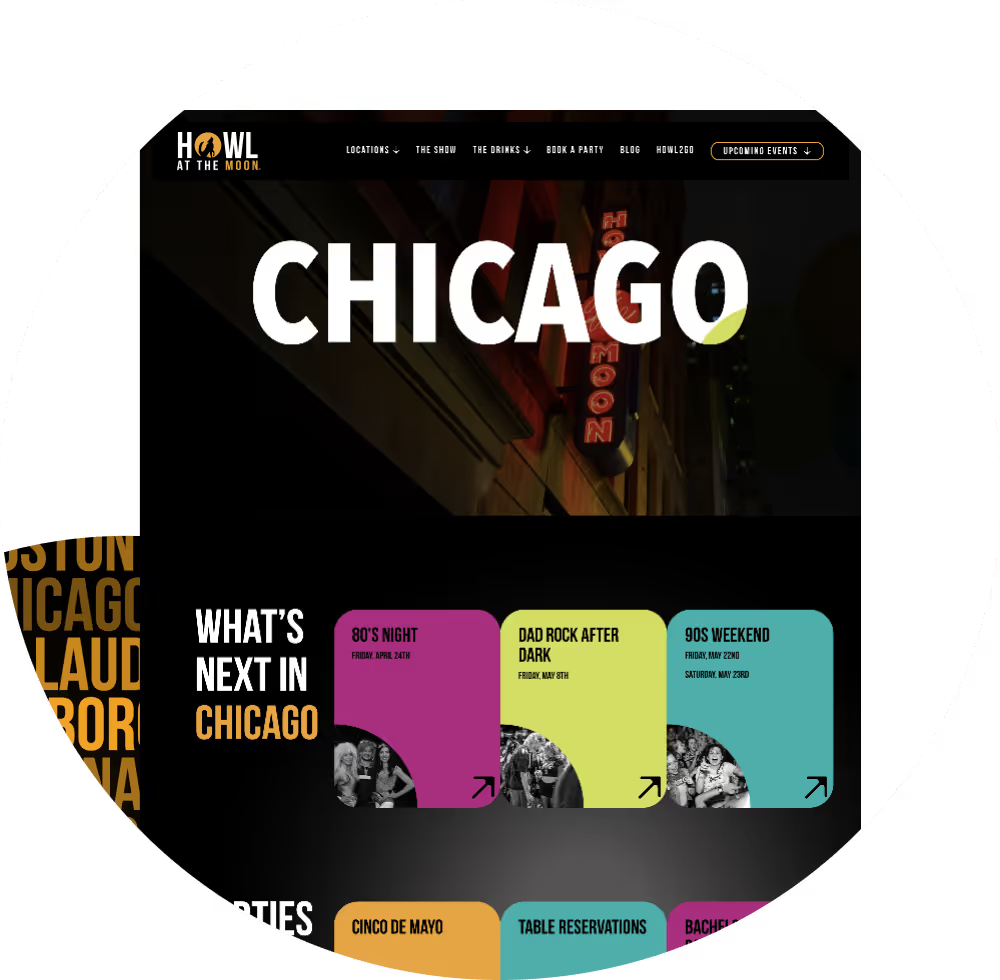
A night out at Howl at the Moon (HATM) is a one-of-a-kind nightlife experience, with singing, dancing, and an upbeat piano bar where talented musicians rotate instruments and take turns on vocals. With locations across 14 cities and 3 cruise lines, plus Howl2Go bringing the party directly to private events, HATM has built a national reputation for high-energy entertainment. Our partnership with HATM began with a bold goal: redesign both the main HATM website and the Howl2Go site to match the energy and scale of their experiences. The result is two vibrant, interactive sites that capture the magic of the experience, streamline content, and prioritize engagement.

The Challenge

Welcome to the show.

HATM’s digital presence needed to reflect the excitement of the in-person experience while serving many locations and multiple audiences, from casual visitors looking for a night out to corporate clients booking private events. For Howl2Go, the challenge was slightly different, creating a streamlined site that clearly communicates the traveling show’s services and drives bookings. Both sites required intuitive navigation, a modern look and feel, and scalability for future updates.
A Red Rocks event thumbnail on the website
The Process

But first, strategy.

Over the years, the Red Rocks’ brand and website evolved unintentionally into an unwieldy experience for their fans and their internal team. To understand their industry, audience, and story, we assessed current performance, developed user personas that focused on their digital pain points, and built a strategic information architecture. As we learned about their organizational goals and operations, their team shared the need to have a functional store as soon as possible, given that the summer is their most important merchandising season. Because we flagged the Red Rocks Store early on, we were able to build and launch an eCommerce microsite to serve as their online store a full year prior to the full experience.
The Red Rocks Style Guide

What if we...?

Red Rocks didn’t have a strict brand definition, and we developed several iterations of the design without an “aha” moment. So, rather than continuing to swing and miss, we created a new Visual Identity Workshop, where their team—given direction, time, and guidance—collaborated with our designers to define the direction for the Red Rocks’ brand moving forward. Then, from that shared place of understanding, our design team regrouped, strategized, and presented the brand style guide that finally nailed the essence of Red Rocks (“aha!”).
The Red Rocks Typography Guide

Capturing a feeling.

Red Rocks means so many different things to different people. We created a design language that allows for flexibility across mediums but still feels uniquely “Red Rocks.” To create the illusion of depth in digital and echo the expansive, outdoor, rugged feeling of the amphitheatre, the design uses texture as an element. The speckled layer appears throughout the website—applied to backgrounds, text, and buttons—and also inspired the custom, bold typeface that’s now a Red Rocks’ brand staple.
The Red Rocks Event Calendar

Getting clever about priority.

Red Rocks has a lot of activities to promote—from electronic dance concerts to “Yoga on the Rocks.” To prevent content-overload, we balanced their bold branding with simple UX, giving the users more control. On the calendar and events page, users can toggle between calendar, list, and grid views, as well as filter and/or sort the content. Ad space is strategically placed throughout the site to empower the sponsorship team to earn revenue, without distracting from the overall experience.
The Red Rocks Concerts & Events landing page

At lightning speed.

With so much content, there was a lot of data to manage behind-the-scenes. For the backend, we diverged from a traditional WordPress install in a few areas. To get quick responses on the calendar and the archived events, we used custom REST endpoints to pull the data we needed when we needed it, and cached the results for quick execution of core website features. For some pages, we rolled a custom disk-based caching method for blocks of event data. It’s compiled on a seperate server and then distributed (via file) to the load balancer. For these pages, this removes the querying burden from the database, which can be a potential bottleneck and cause performance issues.
Button styles from the Red Rocks style guide

For every fan.

From the beginning of the project, accessibility was a part of the design and development decisions. An example of this in practice is the top navigation menu: it had 8 state changes throughout the experience (meaning that visually, it looked different depending on what page the user was on). Our design and development teams worked to ensure that, with the different elements, states, and platforms, the top navigation was accessible at all times. Elements were engineered to be accessible without losing their effect.
The Red Rocks logo on the homepage

Integrated for a better experience.

One of the biggest complaints about the user’s previous experience was the online ticketing system: it was silloued, confusing, and clunky for users to purchase a ticket. To make it a more streamlined process, we integrated the website with AXS, which included the technical integration but also the point in the experience to send users to AXS for checkout. Another insight uncovered by our customer journey map was the need to check the weather. With a widget, we have built a weather feature on the homepage. Custom icons are changed and displayed in real time (updated every 5 minutes). Other incoming integrations include Dinetime for easy reservations at the Ship Rock Grille. On an outgoing basis, the website provides the new app with webviews to seamlessly pull in content. The result, the Red Rocks team only has to manage content in one place.

The event detail page for The Avett Brothers

Redefining the agency/client relationship.

Working as one team, Red Rocks and Clique brainstormed direction for visual brand identity, analyzed integration systems for development, evaluated potential CMS platforms for build. The project was successful because of the collaboration and support on both sides. It wasn’t the traditional formula of an agency delivering for a client, but the give and take of one high functioning team.
The Process

One-of-a-kind

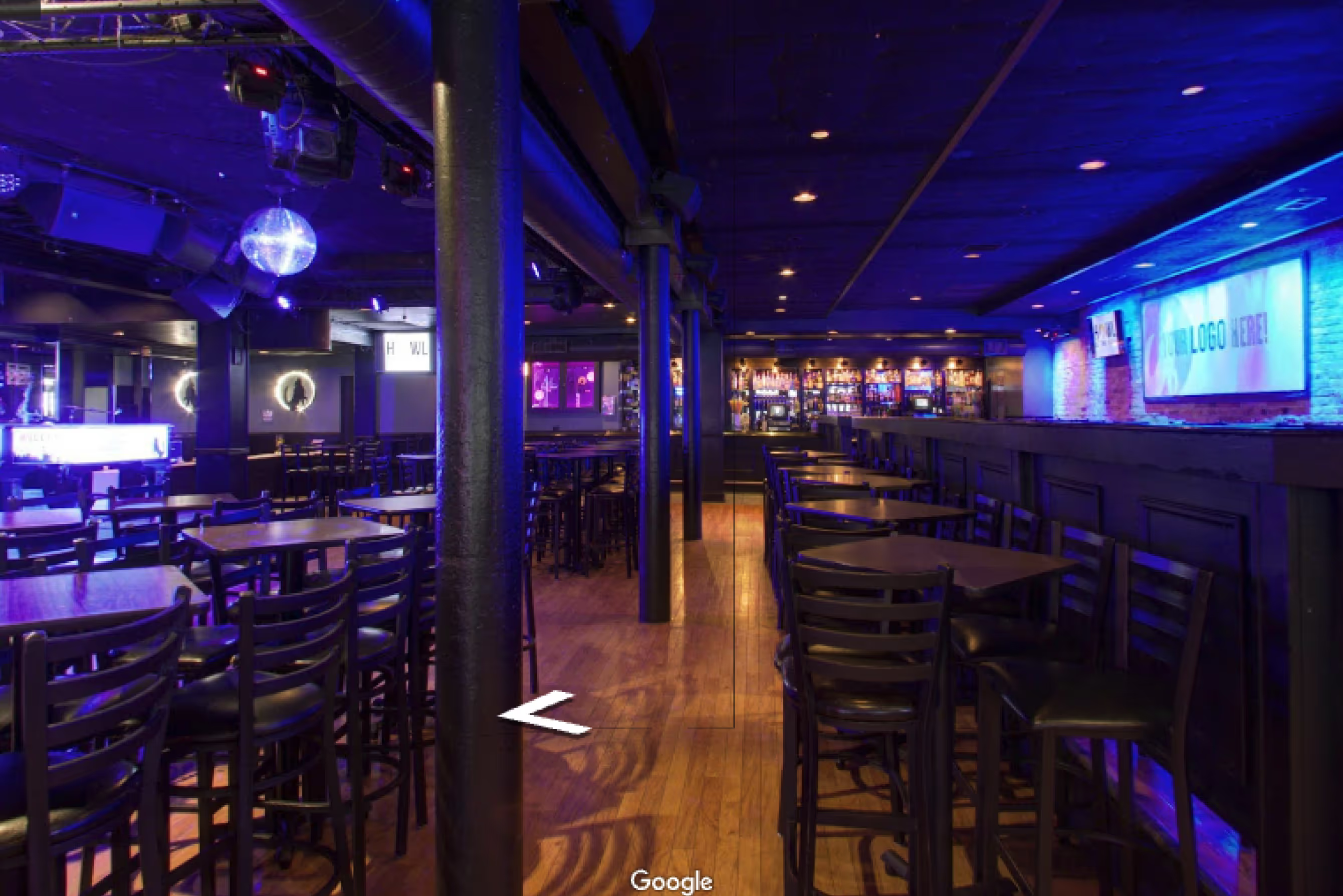
We started with strategy workshops to understand HATM’s offerings, audiences, and goals. When we say it’s a “one-of-a-kind experience,” we’re not kidding (we, of course, went to the Chicago location for “research.”) It’s not just a live band, or just a bar, or just a restaurant. So when we set off on the discovery stage, we spent a lot of time brainstorming how we could accurately capture that in both the copy and the design. For H2G, the process was a bit different. That site needed to be more “functional,” so we focused on defining the key conversion points and crafting a content strategy that prioritized form fills. Moodboards, design iterations, and homepage concepts helped establish creative directions that reflected each brand’s high-energy vibe.

In sync.

Our work with HATM pretty quickly went past the typical client/agency relationship. Sometimes things just click! (...pun intended…) The HATM team has a dedicated designer, so we had the unique experience of collaborating on the actual creation and optimization of the designs. This, along with genuine trust on both sides, and a strong understanding of our goals, saved the project a lot of time and effort.

Showtime.

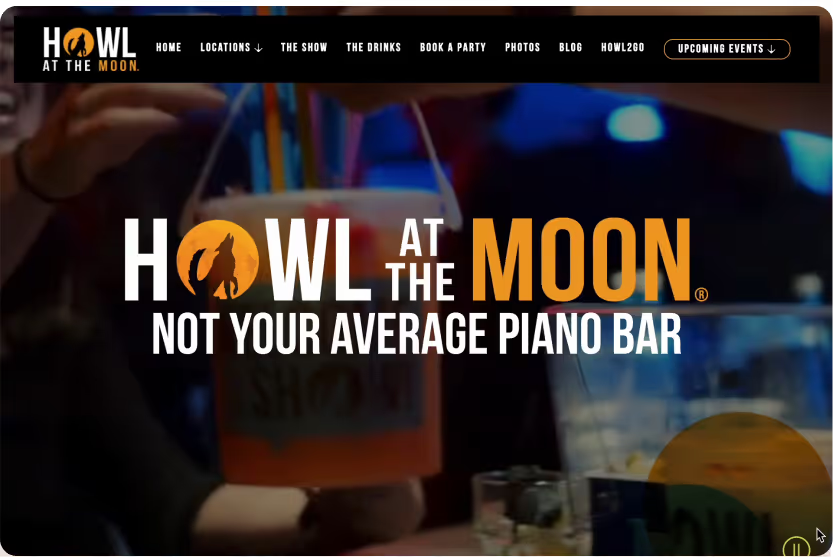
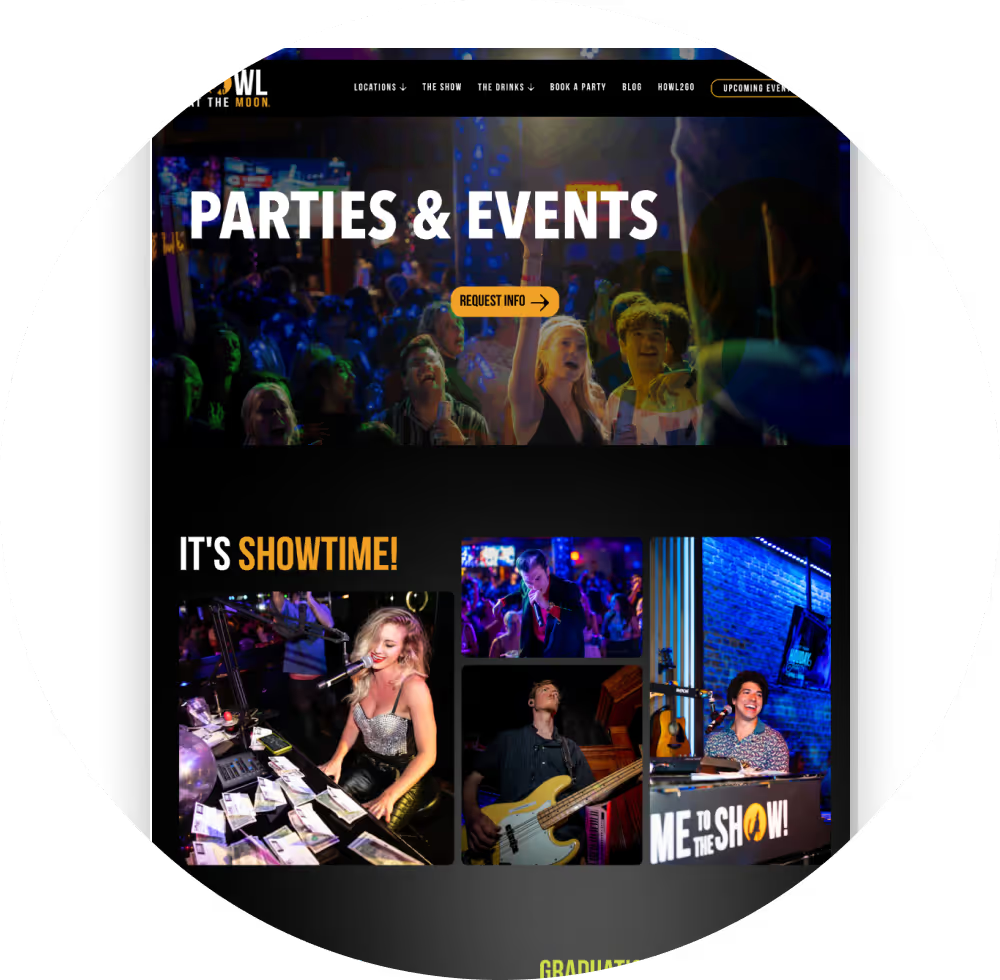
We translated HATM’s lively atmosphere into the digital space with bold colors and graphics, interactive design elements, immersive video, and a clear content hierarchy. For Howl2Go, the design emphasized accessibility and user engagement, creating pages that were easy to navigate and optimized for conversions. Both projects leveraged modern platforms tailored for the specific needs of each site and team, Webflow for H2GO and WordPress for HATM, to ensure easy content management and long-term scalability.

Party favors.

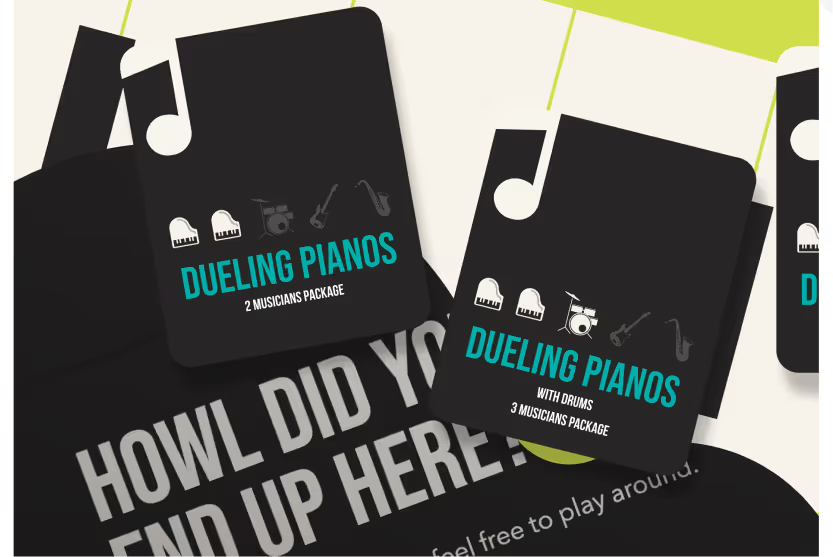
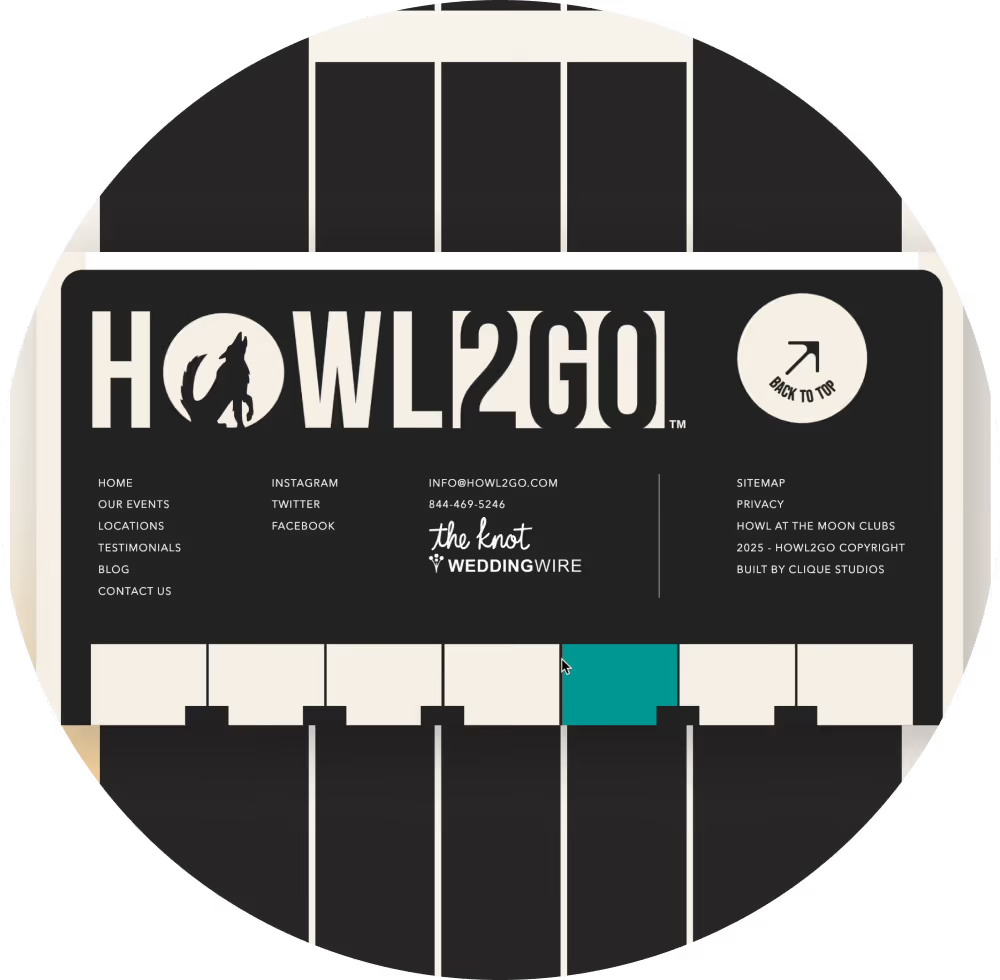
We incorporated features like a playable piano on H2GO’s site and interactive spotlights on HATM to reflect the interactivity of the real-life Howl experience. SEO, performance optimization, and robust CMS functionality were integrated to support continued growth. And last but not least, both websites were built fully responsive for mobile and tablet users.

Encore.

Our collaboration with Howl at the Moon is ongoing, using a flexible, phased approach that allows us to focus on what is most needed at any given time. Since our initial project, we have additionally launched event pages, table registration landing pages, and more.
The Solution

Now, when you go to either site, it genuinely feels like an extension of the live venue. (Like I said, we’ve become quite familiar. Call it working overtime.) It’s bold, interactive, and just plain fun. HATM’s new website captures the nightlife while making it easy for visitors to explore events, locations, and booking options. Howl2Go’s site highlights private event offerings with a vibrant, playful design, clear calls to action, and optimized pathways for lead generation. All that to say…let’s keep the party going!

Strategy workshops to define audiences, messaging, and key conversion points
Stakeholder coordination to ensure feedback and approvals were streamlined
UX research, content prioritization, and navigation analysis
Flexible templates to support future growth and ongoing updates
Visually engaging homepage that mirrors the energy of live events
Streamlined navigation for both HATM and H2GO audiences
Interactive content and media elements to reflect the piano bar experience
Optimized mobile experience for event discovery and bookings
Flexible CMS for easy content updates and scalability
Like what you see?

Build something with us.

Talk to us